The Foundation for Climate Restoration (F4CR) is one institution focused on emerging CDR companies that hold the potential for creating breakthrough technologies capable of bringing atmospheric carbon concentration levels down to safer levels. I have found F4CR to be a great resource for identifying nascent CDR companies that have great potential. Another excellent source of information on CDR companies is OpenAir Collective, which offers webinars led by entrepreneurs working on innovative CDR ideas.
The New IPCC Report: Prepare Now for the Future that Lies Ahead
By Delaney Pues
“Technology-led, market-led or state-led transitions aimed at meeting Paris Agreement and SDGs may fail without integrating dimensions of social justice and addressing the social and political exclusion that prevent the disadvantaged from accessing such improvements and increasing their incomes.” (1)
On February 28, the IPCC Working Group II report was released. With a particular focus on “transformation and system transitions in energy; land, ocean, coastal and freshwater ecosystems; urban, rural and infrastructure; and industry and society,” it also assesses “economic and non-economic losses and damages.” Working Group II focuses on the vulnerability of socio-economic and natural systems to climate change, negative and positive consequences of climate change, and options for adapting to it. (2)
Undoubtedly, the report serves as another wake-up call to mobilize the masses towards transformative and immediate action. It reaffirms that “the ambitious temperature targets agreed upon in Paris in 2015 will require at least some carbon dioxide removal (CDR), i.e. all 1.5°C pathways feature annual removals at Gigaton level.” (3) However, it also warns of risks including maladaptation, adverse side effects, and tradeoffs associated with reliance on CDR. While showcasing the increasing negative impacts of burning fossil fuels on both people and the planet, it acknowledges how these impacts disproportionately burden already disadvantaged groups: “Vulnerability of ecosystems and people to climate change differs substantially among and within regions (very high confidence), driven by patterns of intersecting socio-economic development, unsustainable ocean and land use, inequity, marginalization, historical and ongoing patterns of inequity such as colonialism, and governance.” (4)
The report looks at placing an emphasis on Indigenous and local knowledge to “ensure that climate action not only does not cause further harm, but also addresses historical injustices committed against Indigenous Peoples and other marginalized social groups.” This affirms F4CR’s recent addition of equity as the fourth criteria to climate restoration. Learn more about this in the F4CR White Paper, and stay tuned as we dig deeper in our upcoming Solution Series, which launches in April.
As we highlighted last year, we’re not waiting for the IPCC to call for climate restoration, as it is a scientific and political goal. With CDR being one of the main pathways towards any potential for a restored climate, we did look for the most up-to-date research, science, and data within the report. There were mentions of negative-emission technologies, carbon sequestration, and carbon removals. These solutions remove and/or store carbon dioxide somewhere other than the atmosphere, which is critical given that atmospheric carbon is what continues to warm our planet.
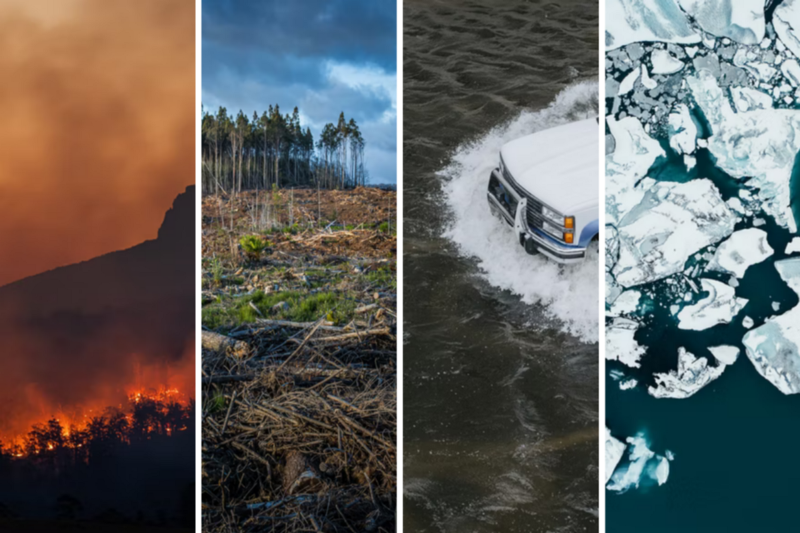
A key element of climate restoration is nature-based solutions that include reforestation, coastal blue carbon, regenerative agriculture, and soil carbon sequestration practices. The report highlights the increasingly harmful environmental impacts of climate change, such as wildfires and natural disasters, which will be continually at odds with nature-based solutions. Wildfires account for “up to one-third of annual average ecosystem carbon emissions, while major fire seasons can emit up to two-thirds of global ecosystem carbon emissions.” (5)
When thinking about our criteria of scalability and permanence, it’s increasingly clear that focusing on nature-based solutions has a number of limitations and risks. For example, the storage capacity of large-scale afforestation and soil carbon sequestration techniques levels off over time, and the permanence of these solutions is contingent upon the maintenance of the area, (6) which will become increasingly difficult as climate change-driven disturbances fuel wildfire, drought, and insects. (7)
Technology-based solutions
Direct air capture (DAC) and bioenergy with carbon capture and storage (BECCS) are emphasized as technology-based solutions. These approaches were showcased for both their potential and their limitations, depending on associated incentives, policies, and governance that guide their deployment.
One estimate suggested, “Negative-emission technologies, such as direct air capture (DAC) of CO2, could reduce emissions up to 3GtCO2/year by 2035, equivalent to 7% of 2019 global emissions. However, they can increase net water consumption by 35 km3/year in 2050 (Fuhrman et al., 2020) under the low-overshoot emissions scenario” while “[d]eveloping countries are projected to witness the highest increase in future energy demand under 2°C global warming leading to significant increases in water use for energy production.” (8)
Each solution brings its own set of risks, uncertainties, and unforeseen consequences, especially at the scale needed to restore the climate. The community also has a role in educating and advocating for approaches to implementation that address deeply entrenched inequities, consider potential benefits and/or consequences, and prioritize the robust research and development needed to bring technologies to restoration-scale deployment.
What’s next?
While the focus on CDR was minimal in comparison to previous reports, it is not to say that we should cease all planning, research, development, and mobilization of these technologies. As mentioned, Working Group II focused on climate vulnerability, impacts, and adaptation, but Working Group III, which focuses on climate change mitigation, assessing methods for reducing greenhouse gas emissions, and removing greenhouse gas emissions from the atmosphere, will release their contribution in April 2022. (9)
This report showed that we must minimize risks while maximizing both climate and non-climate benefits in accordance with mitigation strategies. Stopping emissions as soon as possible will lead to less CO2 in the atmosphere and prevent us from continually increasing the scale of removal needed to reach pre-industrial levels of CO2.
Additionally, F4CR Local Chapter volunteers and Youth Leaders for Climate Restoration must advocate for the research and development of potential solutions while collaborating with groups that are ensuring the phase-out of fossil fuels. Failing to prepare for the future and not meeting the Paris Agreement targets places a risk on both people and the environment to rely on underdeveloped and potentially risky climate interventions. We must act now to prepare for the future that lies ahead.
_________________
Endnotes
(1) IPCC, 2022: Climate Change 2022: Impacts, Adaptation, and Vulnerability. Contribution of Working Group II to the Sixth Assessment Report of the Intergovernmental Panel on Climate Change [H.-O. Pörtner, D.C. Roberts, M. Tignor, E.S. Poloczanska, K. Mintenbeck, A. Alegría, M. Craig, S. Langsdorf, S. Löschke, V. Möller, A. Okem, B. Rama (eds.)]. Cambridge University Press. In Press.
(3) IPCC, 2022: Climate Change 2022: Impacts, Adaptation, and Vulnerability. Contribution of Working Group II to the Sixth Assessment Report of the Intergovernmental Panel on Climate Change [H.-O. Pörtner, D.C. Roberts, M. Tignor, E.S. Poloczanska, K. Mintenbeck, A. Alegría, M. Craig, S. Langsdorf, S. Löschke, V. Möller, A. Okem, B. Rama (eds.)]. Cambridge University Press. In Press.
(4) IPCC, 2022: Climate Change 2022: Impacts, Adaptation, and Vulnerability. Contribution of Working Group II to the Sixth Assessment Report of the Intergovernmental Panel on Climate Change [H.-O. Pörtner, D.C. Roberts, M. Tignor, E.S. Poloczanska, K. Mintenbeck, A. Alegría, M. Craig, S. Langsdorf, S. Löschke, V. Möller, A. Okem, B. Rama (eds.)]. Cambridge University Press. In Press.
(5) IPCC, 2022: Climate Change 2022: Impacts, Adaptation, and Vulnerability. Contribution of Working Group II to the Sixth Assessment Report of the Intergovernmental Panel on Climate Change [H.-O. Pörtner, D.C. Roberts, M. Tignor, E.S. Poloczanska, K. Mintenbeck, A. Alegría, M. Craig, S. Langsdorf, S. Löschke, V. Möller, A. Okem, B. Rama (eds.)]. Cambridge University Press. In Press.
(6) Buck, H. J. (2020). After Geoengineering: Climate tragedy, repair, and restoration. Verso.
(7) Anderegg, W. R. L., Chegwidden, O. S., Badgley, G., Trugman, A. T., Cullenward, D., Abatzoglou, J. T., Hicke, J. A., Freeman, J., & Hamman, J. J. (2021). Climate risks to carbon sequestration in US forests. BioRxiv, 2021.05.11.443688. https://doi.org/10.1101/2021.05.11.443688
(8) IPCC, 2022: Climate Change 2022: Impacts, Adaptation, and Vulnerability. Contribution of Working Group II to the Sixth Assessment Report of the Intergovernmental Panel on Climate Change [H.-O. Pörtner, D.C. Roberts, M. Tignor, E.S. Poloczanska, K. Mintenbeck, A. Alegría, M. Craig, S. Langsdorf, S. Löschke, V. Möller, A. Okem, B. Rama (eds.)]. Cambridge University Press. In Press.
Like a seed sows the roots of a tree, so does one individual idea ripple through society. Art breeds ideas at exponential rates. With this in mind, I made “Mona” to inspire others to live sustainably — “Mona” (abbreviated ‘Mother Nature’) is the leading single from About You’s upcoming album and is a personification of the climate crisis.
There are points in history when collective consciousness shifts, most often out of necessity. Like the most recent pandemic, the dawn of the internet, and when electricity was invented — society at-large shifts to embrace change. Our next big societal shift will be due to the effects of climate change and its impact on our food supply, the water we drink, the air we breathe, and places we can live. The once symbiotic relationship between humankind and Mother Nature is now completely out of balance.
Our film “Mona” aims to entice the audience through sensual and seductive imagery — to engage with the true narrative of our story: humankind’s apathetic abuse of the earth. The story is depicted through a human relationship between two people: Mona (Mother Nature) and Mortal (Man’s Ego). Throughout the song and film, Mortal’s abuse and lack of concern slowly seals his fate. An unsustainable relationship ultimately leaves Mona as the last one standing. By telling this story, we seek a deeper understanding of our own relationship with Mother Earth.
I chose music and film as a medium to convey this message because at the heart of present-day culture are those two art forms. Culture informs community, and community creates our future. This song and film is for the collective culture. I don’t think “Mona” will be the one thing that changes everyone’s mind, nor do I think any one piece of art can do that. But as a collective of pieces, informing culture, informing our treatment of the planet, every contribution counts and “Mona” is mine.
Check out the one-on-one interview with Max Poscente and F4CR Director of Donor Relations, Delaney Pues, here.
“Mona”, the single, is set to release on April 6, 2022, and the film set to music releases on Earth Day, April 22. In partnership with the Foundation for Climate Restoration, a portion of all proceeds will be donated to support the climate restoration movement. Please donate today.
The world today faces a mounting environmental crisis. Rising levels of CO2 are leading to global warming, the acidification of our oceans, and the destruction of ecosystems worldwide. Worse yet, these changes have led to feedback mechanisms that are making the situation worse. In short, Climate Change constitutes an existential threat that demands action.
The extent of Climate Change and the dangers it poses are regularly cataloged by the Intergovernmental Panel on Climate Change (IPCC). This United Nations body was created to provide policymakers with regular scientific assessments, notify them of the implications for future changes, and recommend adaptation and mitigating options.
But is this enough? Adaptation and mitigation mean focusing on limiting the extent of the damage and dealing with whatever comes our way. In response, there is a growing movement to introduce a third priority to Climate Change action – restoration. Rather than merely limiting or absorbing the damage, we should reverse it.
Senator Dave Cortese (D-Silicon Valley) has introduced SB 1297 to continue his innovative work on climate restoration.
Cortese is working with stakeholders from environmental justice groups, labor, and industry to craft a plan for California to not only adapt to, but to reverse climate change.
The Foundation for Climate Restoration (F4CR) today published its white paper entitled, Climate Restoration: Achieving and Safe and Healthy Climate by 2050, which explores how we can remove excess carbon from the atmosphere to restore the climate for future generations.
Climate restoration aims to safely and permanently remove excess carbon from the atmosphere so that our climate is returned to pre-industrial levels of CO2. F4CR’s explicit goal is to reduce atmospheric CO2 from today’s levels of nearly 415 parts per million (ppm) to below 300 ppm by 2050.
CDR in 2022 and Beyond — White Paper Highlights Rapid Advancement of Carbon Dioxide Removal Industry
If you’ve been following the carbon dioxide removal (CDR) industry for the last few years, you’re probably blown away by the progress — just like us! CDR has become much more widely known, and the number of companies working in the space has skyrocketed. Competitions like XPRIZE’s Carbon Removal Prize are helping spur even more innovation, and funding from corporations has increased beyond what anyone could have predicted. It’s exciting to see and sometimes overwhelming to keep up with.
Rewind to 2019, when F4CR hosted the First Annual Global Climate Restoration Forum at UN headquarters in New York City. In conjunction with that event, we launched a white paper, describing the goal of climate restoration and how we envisioned different CDR solutions as contributing to its success. The paper was exceedingly helpful in getting members of the growing climate restoration movement up to speed. After reading the paper, they understood our perspective as an organization and had an overview of what looked, at the time, like the most promising solutions.
Given the rapid growth of the CDR sector, though, that paper couldn’t serve our needs forever. While we put out several updates over the years, eventually, too much had changed. Solutions estimated to have only a modest potential to scale prior to 2019 started looking far more promising. Solutions that seemed hard to finance in 2019 became viable thanks to corporate support (including Stripe and Microsoft). And, solutions that would require policy support to be widely adopted started looking possible as more policy makers began to understand the need for CDR.
We decided to rewrite our white paper, with all of these changes in mind. Now, we’re excited to present it to you, our community. We hope that it will provide you with a clearer understanding of the work of climate restoration, the opportunity that the public sector can play, and how individuals can contribute. We also hope you’ll spend some time looking through the sources listed in the footnotes to more deeply explore any you find intriguing — there’s a lot to delve into!
Click here to download a copy of F4CR’s White Paper “Climate Restoration: Achieving a Safe and Healthy Climate by 2050”
If you want more in-depth information about any of the CDR solutions mentioned in the paper or in the Appendix tables, make sure you’re subscribed to our newsletter. Throughout 2022 we’ll be releasing our Solution Series, highlighting one type of CDR solution per month. Follow along throughout the year and you’ll be a pro by 2023!
Most of all, let us know what you think. Drop us a line in the comments here. We love hearing from our community.
2022, the year of climate restoration
— Dr. Erica Dodds, Chief Operating Officer
There’s nothing like a new year, starting with a clean slate, to leave me feeling energized and inspired. I ended 2021 reflecting on all the progress we’ve seen in the climate restoration space. I’m starting 2022 ready to roll up my sleeves and join with our growing community to get to work (although I’ll be doing a different kind of work first, welcoming my first child — our newest climate restorer — into the world).
People ask us frequently, “What can I do? How can I get involved?” I think there’s often an implicit hope that the answer is simple: Buy organic produce, ride your bike, recycle your containers. Unfortunately, when the scale of the challenge is as big as climate restoration — removing a trillion tons of legacy CO2 from our atmosphere to make our planet livable for future generations — small individual actions just won’t get us there. It will take a few things for climate restoration to succeed:
1. Innovative solutions
Fortunately, solutions are already being developed (and indeed, implemented and scaled) to rapidly increase our capacity to remove legacy CO2 from the atmosphere, store it durably, and restore our climate. If you’re interested in diving in more deeply to some of the solutions out there, make sure you’re subscribed to our newsletter so you can get updates about our Solution Series. The series will launch later this year and will feature one type of carbon dioxide removal (CDR) solution per month in detail.
The problem with solutions is that, without the conditions they need to succeed, they’re just really good ideas. So it’s critical to both encourage the innovation needed to develop highly scalable solutions while developing the “enabling environment” that those solutions need to succeed (e.g., financing models, policy mechanisms, and public support).
2. Widespread awareness
The fact that you’re reading this blog post means that you are more educated than the average person regarding climate change. As it stands, most people don’t realize that climate change won’t be solved when we reach net-zero emissions. They don’t know that CO2 lingers in our atmosphere for hundreds to thousands of years if left unchecked. They don’t know that CDR solutions exist or that the CDR industry is growing rapidly. And they certainly don’t know that they can demand a restored climate instead of one that leaves the survival of humanity in question.
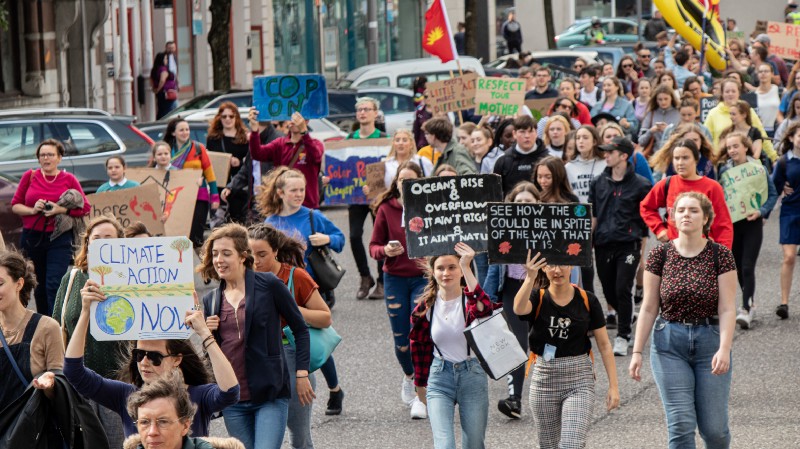
Broadening the conversation around climate restoration is critical because paradigm shifts don’t happen without widespread awareness and mobilization. If we want to go beyond net-zero, we need a major public awareness campaign in 2022. F4CR has several initiatives that will contribute to enhancing public awareness, from our forthcoming Solution Series to the work of our Youth Leaders and Local Chapter members.
3. Robust policy support
Like paradigm shifts, economic shifts don’t happen in a vacuum. Robust policy support can substantially accelerate the transition to a net-zero carbon economy and beyond. Policymakers can incentivize the use of low-carbon and carbon-negative building materials, the adoption of land management techniques that rebuild natural carbon sinks, and the research and development of innovative new CDR solutions. Policy can also be used to require the direct procurement of carbon removal by governments, which can help move CDR solutions down the cost curve more quickly, enabling them to scale up faster and more economically. F4CR’s Local Chapters focus on working with local and state-level elected officials to enact these types of policies that accelerate the scale-up of climate restoration solutions.
Where do you fit in?
I invite you to take the leap in 2022 and get involved in climate restoration. Perhaps the biggest impact you can have is by joining our Local Chapter program. If you’d like to learn more, fill out this quick survey or email Myra Khan, our Chapter Empowerment Coordinator. If volunteering isn’t right for you at this time, consider becoming a monthly donor to help sustain our momentum. Let’s make 2022 the year of climate restoration!
In 2022, resolve to dissolve hopelessness and build political will
—Terri Pugh, Chapter Empowerment Coordinator
“I hope you’ll become part of the solution,” Al Gore told the crowd near the end of the more than hour-long talk. “I want to recruit you … We can do this. People doubt we have the political will. Just remember that political will is itself a renewable resource. Go out and renew it.” (YaleNews)
If you are looking for a meaningful resolution this New Year’s season, consider creating the political will to implement solutions to restore the climate. If that sounds impossible to you, don’t worry! The Foundation for Climate Restoration (F4CR) provides training to guide you each step of the way.
Political will is the power behind any political change. Change happens When people speak up and ask for what they really want from their government. Without input, the government follows old trajectories that might not match the latest information available or even the present-day needs of the people.
The Problem
Climate change becomes a more pressing problem with every passing day. The pressure is mounting on policymakers to address climate change as coastlines suffer, woodlands burn, and temperature shifts cause abnormal weather extremes. According to a recent White House report, “Extreme weather has cost Americans an additional $600 billion in physical and economic damages over the past five years alone.” We cannot afford to ignore this situation any longer from an economic perspective — or any perspective.
We need to move rapidly to jump-start the carbon removal industry as quickly as possible. This, in concert with emission reduction efforts, is critical to restoring a safe and healthy climate, but it will require political will and engagement from all levels of government.
The Solution
Education and advocacy are critical to restoring our climate. That’s why F4CR is training teams of people to become experts on policy solutions. Together, we can educate communities and elected officials about these solutions, some of which are already in use.
As Mike Robinson of the University of Washington says, “In order to have any realistic hope of sticking to 1.5 degrees of warming, we need carbon dioxide removal to become a new industry as big as today’s oil and gas industry within 10–20 years. Just think about that — an industry in its infancy today needs to grow in a decade into an industry that employs millions of people worldwide. The territories that lead the way in supporting the development of this new industry will be the territories that reap the biggest economic reward!”
Elected officials are interested in these industries, and our Local Chapter volunteers are helping to educate them. In many cases, these solutions can attract jobs and improve economies; especially if the area is receptive to these new technologies. This is a nonpartisan effort — all sides have a vested interest in long-term job creation.
F4CR Local Chapters
In 2021, F4CR formally launched its local chapter program. We started with five pilot chapters and have quickly quadrupled, with coverage now spanning four continents. Our local chapters train people to understand policies that restore the climate, provide recommendations for meeting with officials, and write letters-to-the-editor and op-eds. Our teams meet and strategize with one another and through fellowship, we keep our teammates moving forward on the frontlines to help officials understand natural and technological solutions.
The key to our program’s success is robust training and community involvement for volunteers. Please fill out this quick survey or email our local chapter coordinator, Myra Khan, at myra@F4CR.org.
Starting your own local chapter is a great way to start off your new year’s resolutions! With one call you will be taking meaningful action to enable climate change solutions. Here’s to the year ahead.